When most people think of old U.S. money, they picture large silver dollars, gold coins, or oversized paper notes. But one of the most fascinating—and overlooked—chapters in American numismatic history is U.S. Fractional Currency.
These small paper notes were born out of economic panic, wartime shortages, and a desperate
need for everyday change. From 1862 to 1876, the United States produced roughly $369 million in fractional currency. Today, experts estimate that only about $1.8 million worth still survives, making these pieces of history highly collectible and deeply significant.
This is Part 1 of our deep dive into how U.S. fractional currency began, why it was needed, and how it forever changed the way Americans handled money. Follow along with The Great American Roadshow for the inside scoop.
The Civil War Created a Massive Coin Shortage
To understand why fractional currency was created, you have to understand the economic chaos caused by the American Civil War. When the Civil War broke out, people quickly lost confidence in paper money. Americans began hoarding anything with real metal value:
● Gold coins
● Silver coins
● Copper cents
People trusted hard money because it held intrinsic value, while paper currency—especially
government-issued “greenbacks” was rapidly losing purchasing power. As fear spread, coins began disappearing from circulation.
Silver Coins Were Leaving the Country
One major reason for the coin shortage was the movement of U.S. silver into Canada. At the time, American silver coins were being used in Canada to facilitate everyday small transactions. Because U.S. paper money had depreciated, silver coins were often worth more than their face value. This led to a premium being placed on silver coinage—sometimes as high as 12% above face
value.
That meant:
● A silver dime could be worth more melted or traded than spent.
● People stopped using coins for purchases.
● Businesses struggled to make change.
For ordinary Americans, buying basic goods became increasingly frustrating.
Stores Started Giving Commodities as Change
Imagine walking into a general store, buying a few household items, and instead of receiving coins as change, you were handed:
● flour
● sugar
● cornmeal
● other household goods
That was a real problem during the Civil War coin shortage. With no reliable small change available, merchants had to improvise. This led to the rise of private merchant-issued tokens.
The Rise of Merchant Tokens: The Original “Shin Plasters”
As coin shortages worsened, businesses began issuing their own substitute money, commonly called merchant tokens or “shin plasters.” These were small pieces of paper or token-like substitutes that:
● represented a cash value
● were redeemable only at the issuing store
● helped facilitate daily commerce
While useful, these tokens created major problems:
● inconsistent values
● lack of regulation
● limited redemption
● widespread confusion
The federal government eventually stepped in. In 1862, private shin plasters were officially prohibited, although some continued to circulate into 1863.
Americans Turned to Postage Stamps as Money
Once merchant tokens were restricted, people needed another way to make small purchases. Their solution? Actual U.S. postage stamps. Postage Currency was one of the most unusual emergency monetary solutions in American history.
Common denominations included:
● 1¢
● 3¢
● 5¢
● 10¢
● 12¢
● 24¢
● 30¢
● 90¢
At first, stamps seemed practical—but problems appeared quickly:
● stamps stuck together
● stamps tore easily
● adhesive caused damage
● they stuck to envelopes and wallets
Using stamps as everyday money became inconvenient fast.
Stamp Holders Were Invented to Solve the Problem
To make postage stamps more usable as money, merchants began using brass and tin stamp
holders in 1862.
These holders:
● protected the stamp
● often had a mica front window
● displayed merchant advertising
● allowed the stamp to be seen clearly
This was a clever temporary fix. Even better, unlike merchant tokens, these holders could often be used at multiple businesses. But confusion still remained, and the need for a true federal small-denomination paper currency became obvious.
The Birth of U.S. Postage Currency in 1862
To solve the growing small-change crisis, the federal government introduced official U.S.
postage currency. The first issue was produced from: August 21, 1862 – May 27, 1863
These early notes were issued in:
● 5¢
● 10¢
● 25¢
● 50¢
(With other small values appearing in later issues.) These notes were designed to resemble postage stamps and often featured stamp-like designs to help Americans quickly trust and recognize them. This marked the first true government-backed emergency paper substitute for coins.
Fractional Currency Officially Debuted in 1863
On October 10, 1863, U.S. postage currency evolved into what collectors now know as official U.S. fractional currency. These notes were issued in:
● 3¢
● 5¢
● 10¢
● 15¢
● 25¢
● 50¢
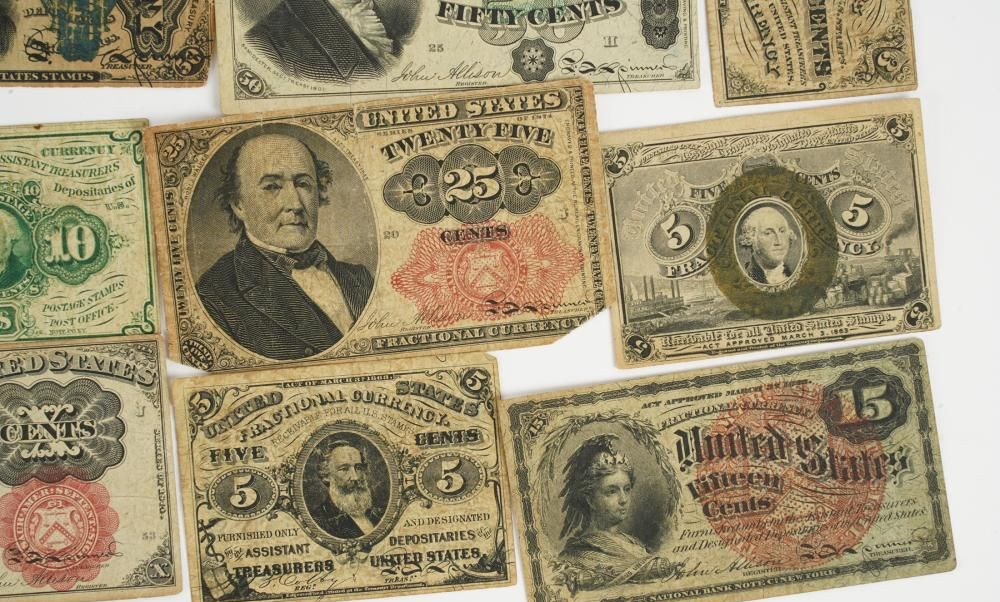
Fractional currency featured an incredible range of designs and historical figures, including:
● presidents
● military generals
● treasury officials
● allegorical images like Liberty
● the Treasury seal
This series remains one of the most visually interesting categories in all of American paper
money. During this era, Congress also passed legislation making it illegal to place living persons on U.S. currency—helping shape the tradition still followed today.
The End of Fractional Currency
As the economy stabilized and coins returned to circulation, the need for fractional paper money declined. The final U.S. fractional currency note was printed on: February 15, 1876. This ended a remarkable 14-year experiment in emergency small-denomination money.
Why Fractional Currency Still Matters Today
Fractional currency tells the story of:
● wartime survival
● economic adaptation
● government innovation
● American resilience
These notes are more than collectibles—they are a direct link to one of the most turbulent periods in U.S. history. With only a small percentage still surviving today, authentic pieces remain highly sought after by collectors, investors, and history enthusiasts alike.
Coming in Part 2
In Part 2, we’ll break down:
● each denomination
● key dates and issue types
● who appeared on the notes
● print totals by series
● what makes certain pieces rare and valuable today
If you own old paper money or inherited historic notes, understanding fractional currency could help you uncover hidden value.
At GREAT AMERICAN ROADSHOW Presented by: Elite Coins & Premier Jewelers Roadshow, we help families identify, evaluate, and understand historic collectibles every day. Whether you’re curious about old notes, rare coins, or inherited collections, knowing the history behind what you own is the first step.
Call Great American Roadshow today at
+1 (800) 456-3234 to learn about
upcoming events and find out what your items may be wort